Pay in installments of $7.45 with
 ,
,
 and
and

Shipping Estimate
USA
- USA
- CAN
- USA
- CAN
Ships within 48 hours · Estimated delivery Jul 2 - Jul 7
 Promo Codes Available:
For Your Every Summer RSVP, with Code: SUMMER15
Description
5 finger snake plant Shop 'Mother in Law Plant - Sansevieria trifasciata' Snake Plant - Care and InfoIntroducing the Mother in law plant, known as Sansevieria trifasciata (syn. Dracaena trifasciata), a popular hardy houseplant that belongs to the Sansevieria snake plant genus. Native to West Africa, the Sansevieria trifasciata has several other names such as the mother in law tongue plant, Viper's Bowstring Hemp, Saint George's Sword, and Devil's Tongue. These names often refer to the long, sword like leaves that resemble the sharp tongue of a snake.
Introducing the Mother-in-law plant, known as Sansevieria trifasciata (syn. Dracaena trifasciata), a popular hardy houseplant that belongs to the Sansevieria snake plant genus.
Native to West Africa, the Sansevieria trifasciata has several other names such as the mother-in-law tongue plant, Viper's Bowstring Hemp, Saint George's Sword, and Devil's Tongue. These names often refer to the long, sword-like leaves that resemble the sharp tongue of a snake. This attractive, low-maintenance houseplant can tolerate drought and low light, making it an excellent choice for offices.
Like other snake plants, these Sansevieria trifasciata mother-in-law tongue plants are known for their tall, upright leaves that grow in a rosette pattern.
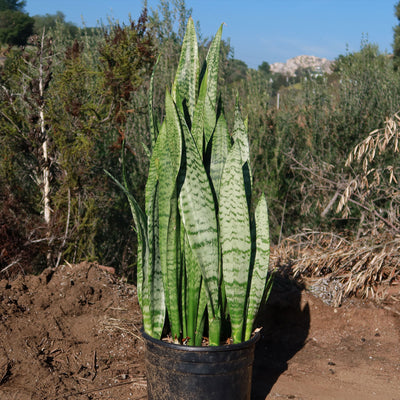
These thick and fleshy dark green leaves have variegated patterns of light gray-green.
The leaves can grow up to 12 feet tall in their native habitat, but when grown indoors, they can grow as tall as 2 feet, adding a dramatic touch to any space.
The mother-in-law tongue flowers are greenish-white and appear on long stalks that rise above the leaves from spring to summer. These Night-blooming snake plant flowers are fragrant and have a lily-like appearance. However, it's important to note that snake plant blooming is relatively rare indoors, and most Snake plant varieties are appreciated for their attractive leaves rather than their blooms.
Mother in Law Plant Key Features & Benefits
- NASA identified the Mother-in-Law Plant as a top air-purifying plant, effective at removing toxins like formaldehyde and toluene.
- Its waxy, upright leaves help reduce water loss, making it highly drought-tolerant.
- It is considered a symbol of good luck and protection in various cultures, often placed indoors for positive energy.
- The Mother-in-law snake plant filters indoor air, supports better mental health, and may reduce allergies, with a lifespan of 5–25 years.
- The snake plant releases oxygen at night, making it a great plant for improving bedroom air quality while you sleep.
The Dracaena trifasciata is an excellent beginner plant because of its adaptability to various growing conditions and its easy-to-grow nature, making it a decorative addition indoors.
Other popular snake plants are: the variegated snake plant with yellow variegated edges, the Zeylanica snake plant, the Bird's nest snake plant, and the Cylindrical snake plant.
When and How to Water Your Snake Plant
The mother-in-law's tongue plant is known for its ability to tolerate drought and is relatively low maintenance when it comes to watering. In general, it's best to allow the soil to dry out between waterings to avoid overwatering, which can lead to root rot. Your Snake plant prefers watering once every 2-3 weeks in the growing season and once every 4-6 weeks in the dormant season.
In the spring and summer, during the growing season, you can water your mother-in-law plant about once every 2-3 weeks. Be sure to thoroughly saturate the soil, allowing the water to drain out of the bottom of the pot to prevent waterlogged roots.
In the winter months, when the plant is in a dormant phase, you can reduce watering frequency to once every 4-6 weeks. This allows your mother-in-law's snake plant to rest and prevents overwatering during its slower growth period.
You can check the moisture level of the soil by sticking your finger about an inch or two into the soil. If it feels dry at that depth, it's a good indication that it's time to water. However, if the soil still feels slightly moist, it's best to wait a bit longer before watering.
Light Requirements - Where to Place Your Mother-in-Law Plant
When growing indoors, your snake plants will thrive and grow best in bright, indirect light for 4-6 hours a day.
Placing your Snake plants near a window where they can receive filtered sunlight throughout the day is ideal.
However, they can also tolerate artificial light, making them suitable for offices or rooms with limited natural light.
When growing outdoors, the Snake plants Sansevieria, prefers bright, indirect light for at least 4-6 hours a day. They can tolerate some direct sunlight, but it's best to provide them with some shade during the hottest parts of the day, especially in regions with intense sunlight. Partial shade or filtered sunlight is generally ideal for outdoor Sensevieria trifasciata Snake plants.
Optimal Soil & Fertilizer Needs
The Sansevieria trifasciata favors very airy, sandy potting soil that drains well and should be fertilized once a year in spring. Planting them in ordinary soil will result in compacted roots, stunted growth, and most likely root rot. Instead, make or buy a well-drained cactus potting mix, or ideally use our specialized succulent potting mix that contains 5 natural substrates and mycorrhizae to promote the development of a strong root system that helps your Snake plants to thrive.
As for fertilizer, the mother-in-law’s tongue plants are not heavy feeders; you can apply a diluted, balanced NPK (5-10-5) liquid fertilizer once a year during the growing season, which is typically spring. It's best to use a general-purpose houseplant fertilizer and dilute it to half the recommended strength.
Remember, it's important not to over-fertilize your Sansevieria Snake plant, as this can lead to the build-up of salt in the soil. This can cause damage to the roots and negatively impact the overall health of the plant. So, when in doubt, it's better to err on the side of caution and fertilize sparingly.
Hardiness Zones & More
In the United States, this is mostly an indoor plant, but if you live in southern Florida or Hawaii, then you can cultivate it outdoors in USDA zones 9-11.
In colder zones, the succulent plant Snake Sansevieria can still be grown, but it will need to be grown indoors or in a greenhouse during the winter months to protect it from freezing temperatures.
While household humidity is generally good enough, these large snake plants will do even better with some extra moisture in the air. Please set up a humidifier nearby or grow them in naturally humid rooms like your bathroom or kitchen.
How to Best Grow Snake Plant Indoors
When grown indoors, these adorable mother-in-law tongue plants thrive in warm and humid conditions, making them perfect for cozy indoor spaces. With temperatures between 60°F and 75°F, this lovable Dracaena trifasciata is sure to feel right at home. Just make sure not to let them get too chilly - anything below 50°F could spell disaster for your lovey-dovey snake plants.
Wildlife - Snake Plant Attracts the Following Friendly Pollinators
The Mother-in-law's Snake plant is a popular houseplant that is known to attract friendly pollinators such as bees, hummingbirds, and butterflies. These pollinators are drawn to the plant's unique flowers, which emit a sweet scent and provide a source of nectar. By welcoming these beneficial insects into your home or garden, you can help support local ecosystems and promote biodiversity.
According to ASPCA, the mother-in-law plant is mildly toxic if ingested, primarily due to the presence of saponins. These compounds can cause gastrointestinal distress in both humans and animals, with symptoms like nausea, vomiting, and diarrhea. However, it is safe to touch and handle, making it a popular choice for indoor plants in homes with pets or children.
How to Propagate Your Mother-in-Law's Plant
For mother-in-law snake plant propagation, you can do this easily by offsets and leaf cuttings. When the plants grow at least four inches tall, divide or take cuttings of the healthy leaves to propagate your snake plant in the spring or summer. New shoots can also be potted on their own.
Repotting a snake plant is crucial for its care, recommended every three to five years. It's important to notice roots growing out of the pot's holes, water draining too quickly, roots filling the container, stunted growth, and a dull appearance.
Key Takeaways
- The Sansevieria trifasciata is commonly called the “Snake Plant” due to its long, upright leaves with wavy, green banding that resembles snake skin.
- This plant was featured in NASA’s Clean Air Study, which found it effective at filtering indoor air pollutants like formaldehyde, benzene, and trichloroethylene.
- It is considered a symbol of good luck and positive energy in Feng Shui, often placed near entrances or workspaces to promote protection and prosperity.
- The plant is extremely drought-tolerant, storing water in its thick, upright leaves and thriving with very little attention.
- This mother-in-law snake plant is one of the easiest houseplants to grow, making it a favorite for beginners and those with busy lifestyles.
Final Thoughts
Overall, the Snake plant or Mother-in-law plant (Dracaena trifasciata) is a low-maintenance houseplant that thrives in a variety of conditions. It is native to West Africa and is well-known for its ability to tolerate neglect and survive in low-light environments. This mother-in-law plant has long, sword-shaped leaves that are typically dark green with light green horizontal stripes, giving it a unique and striking appearance. In terms of snake plant care, it prefers a well-drained potting mix with terra cotta pots and only needs to be watered sparingly, as overwatering can lead to root rot. Additionally, it can tolerate a warm indoor temperature between 60-75 degrees Fahrenheit and does not require frequent fertilization.
Whether you're a beginner or an experienced plant lover, the Dracaena trifasciata Snake plant for sale is a fantastic choice that will bring beauty and freshness to your home or office.
Shipping Notes
- Free Standard Shipping on $100+ Orders to the USA.
- Except Preorder products are shipped in 48 hours.
- Delivery to the USA:
- Standard Shipping : 3-10 business days
- If time is of the essence, please consider selecting expedited delivery for faster service.
Exchange/Return Notes
- We offer a 30-day return/exchange service after receiving.
- Final sale items are not eligible for returns or exchanges.
- To process your return/exchange, please contact us at [email protected]
- Please click here for more details>>> Return & Exchange Policy